Mottram Parish Magazine
-
September 2026
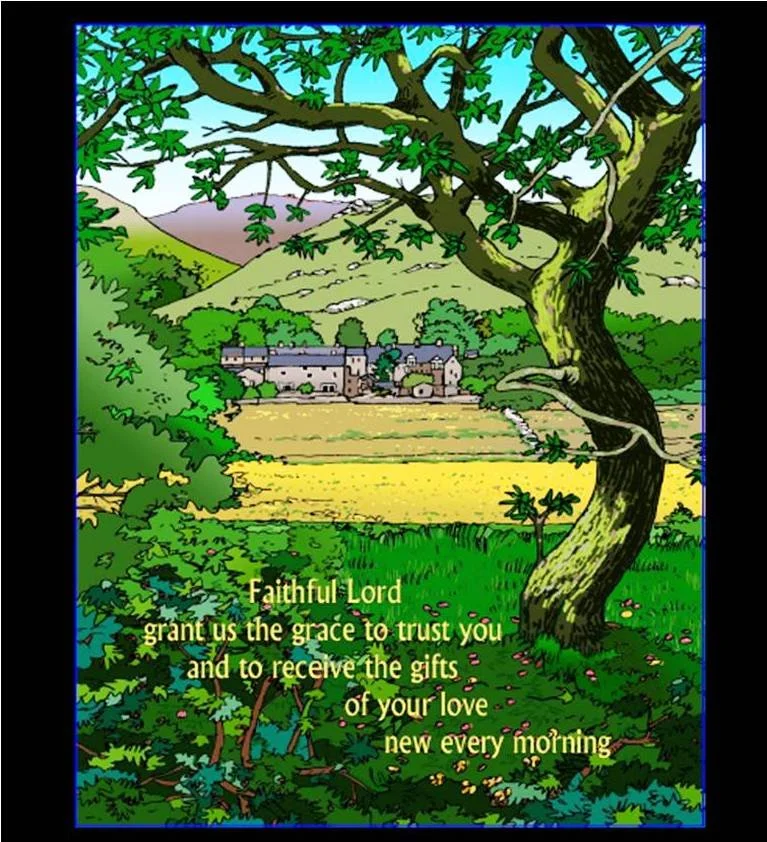
New every morning is the love our waking and uprising prove: through sleep and darkness safely brought, restored to life and pow’r and thought.
New mercies, each returning day, hover around us while we pray: new perils past, new sins forgiv’n,new thoughts of God, new hopes of heav’n.
If on our daily course our mind be set to hallow all we find, new treasures still, of countless price, God will provide for sacrifice.
The trivial round, the common task, will furnish all we ought to ask: room to deny ourselves - a road to bring us daily nearer God.
Only, O Lord, in thy dear love fit us for perfect rest above; and help us, this and ev’ry day, to live more nearly as we pray.
John Keble (1792-1866)
-
October 2026
Bible Sunday - 25th October
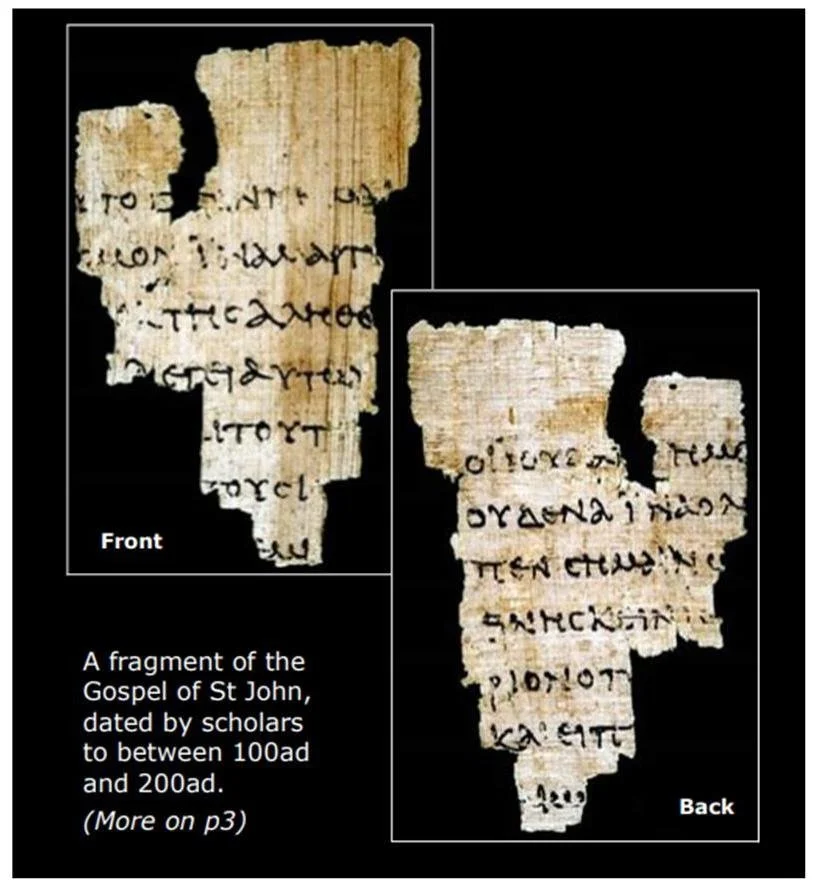
The earliest and most famous Gospel manuscript is the Rylands Papyrus P52, on display at the John Rylands Library in Manchester. It was purchased in 1920 by Bernard Grenfell in Egypt, then translated in 1934 by C. H. Roberts. Three leading papyrologists in Europe, to whom Roberts sent photos of the fragment, dated it A.D.100-150, although most scholars today would use a wider date range of the whole of the second century.
P52 is from a codex (ie. a book, not a scroll) and contains parts of seven lines from the John 18:31–33 on the front and parts of seven lines from verses 37–38 on the back.
Credit -Biblical Archaeology Report
-
November 2026
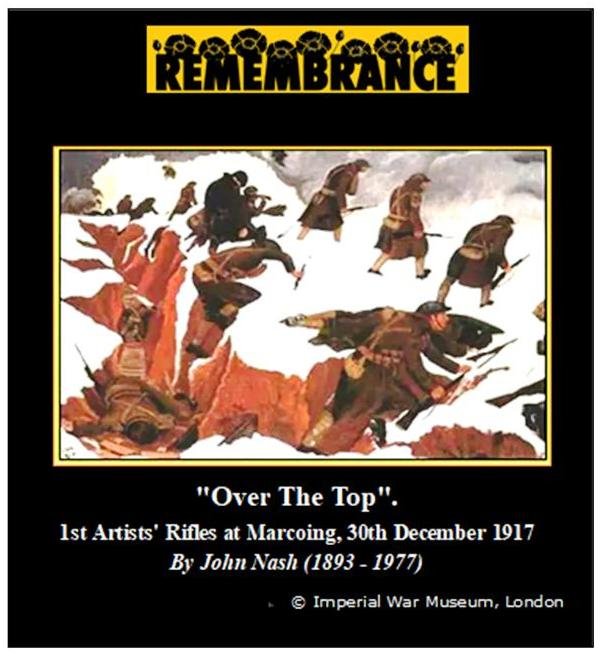
Our cover picture, 'Over The Top' by John Nash, records a counter-attack on Welsh Ridge in northern France on 30 December 1917, during the First World War. It depicts a group of British soldiers climbing out of their trenches into a snow-covered battlefield. Wrapped in heavy winter coats, they move forward through the desolate landscape, while several of their comrades already lie fallen; some in the trench below, others sprawled on the frozen ground. Above them, dark clouds gather and swirl, adding to the painting’s sense of menace and despair. The composition captures both the courage and the futility of the moment.
It was inspired by the artist’s own wartime experience with the 28th Battalion of the London Regiment, during a brutal offensive near Cambrai. Eighty men went “over the top,” and sixty-eight of them were killed or wounded within minutes. Nash was among the few who survived.
The painting was commissioned by the Ministry of Information on the recommendation of John’s brother, Paul Nash, who was also a war artist. It was painted in a shed in Chalfont St Peter, Buckinghamshire and it transformed the artist’s trauma into one of the most haunting visual testaments to the tragedy of the First World War.
-
Get in touch
pollybrown@mottramparish.org.uk
for earlier editions of the magazine
printable versions of the magazine
to contribute to the magazine